
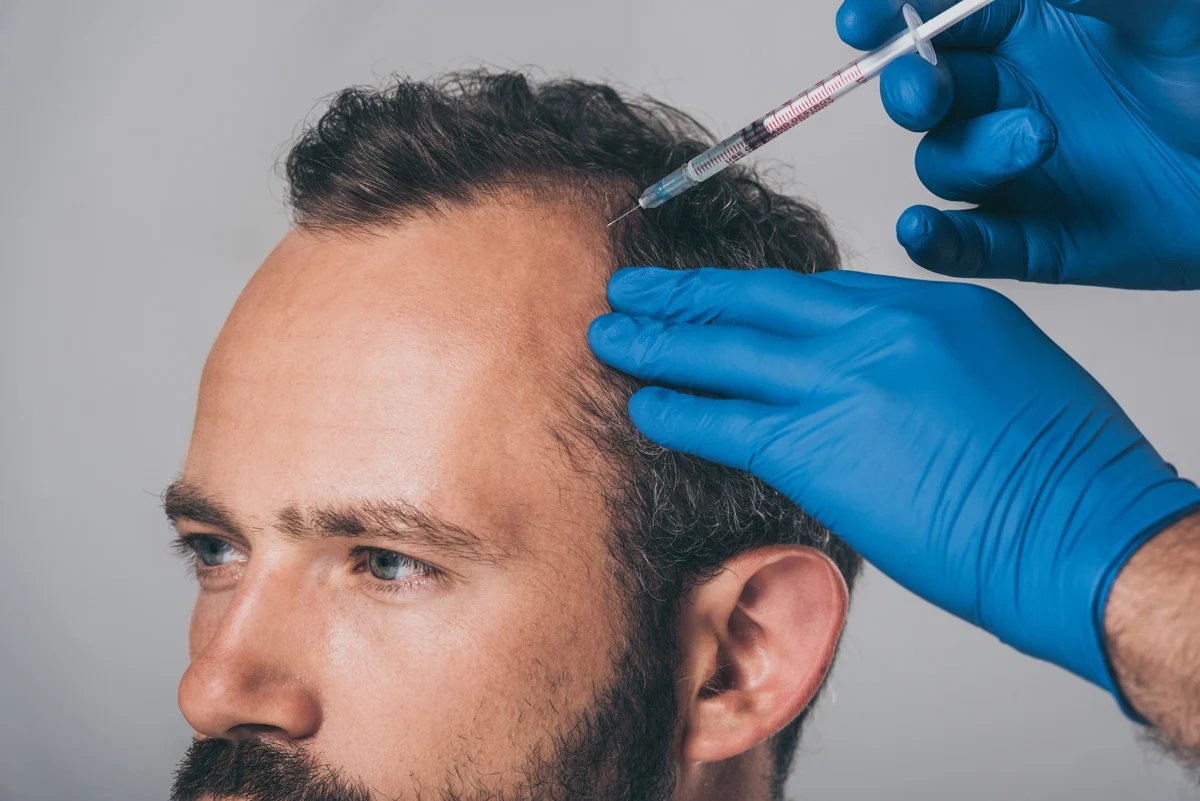
Platelet-rich plasma (PRP) therapy has emerged as a cutting-edge treatment that harnesses your body’s own healing mechanisms to address hair loss. This minimally invasive procedure takes blood from your arm, processes it to concentrate the platelets, then injects it directly into your scalp. The treatment works by delivering growth factors and proteins directly to hair follicles, creating an environment that supports natural hair regrowth. Here is more information about PRP therapy:
Patient’s Own Blood is Used
The foundation of PRP therapy lies in using your body’s own blood as the healing agent. A medical professional draws a small amount of blood from your arm, similar to a routine blood test. This approach eliminates concerns about allergic reactions or rejection, as the treatment utilizes your own biological material.
Your blood contains platelets that carry growth factors and proteins necessary for tissue repair. The process typically begins with collecting blood, depending on the size of the treatment area. This amount represents a fraction of your total blood volume, making the procedure safe for most patients.
Repair Process Begins Naturally
Once injected into the scalp, the concentrated platelets begin releasing growth factors that stimulate dormant hair follicles. Each plays a specific role in cellular regeneration and tissue repair. The repair process occurs gradually over several months. Growth factors promote increased blood flow to the hair follicles, providing them with the necessary nutrients and oxygen for healthy function. This natural healing response encourages follicles to enter the active growth phase of the hair cycle. Your scalp tissue responds by producing new collagen and blood vessels, creating a healthier environment for hair growth.
Concentration of Platelets
The key to PRP effectiveness lies in achieving the right platelet concentration. Higher platelet concentrations deliver more growth factors to the treatment area. The centrifuge process separates the blood into two distinct layers: platelet-poor plasma and platelet-rich plasma. Medical professionals extract only the PRP layer, which contains the concentrated healing factors needed for the treatment.
Hair Restoration & Microneedling
PRP therapy typically combines with microneedling to enhance results. Microneedling creates tiny channels in the scalp, allowing better penetration of the PRP solution into deeper tissue layers. The combination approach addresses hair loss through multiple mechanisms. The procedure typically follows this sequence:
- Scalp preparation and numbing
- Microneedling to create microchannels
- PRP injection into targeted areas
Microneedling alone stimulates collagen production and increases blood flow to hair follicles. When combined with PRP, the treatment amplifies the natural healing response. The micro-injuries from needling trigger your body’s natural repair mechanisms, while the PRP provides concentrated growth factors to accelerate the process.
Try PRP Therapy Today
PRP therapy provides a natural approach to addressing hair loss, utilizing your body’s own healing capabilities. The treatment involves minimal downtime and utilizes familiar medical procedures, such as blood draws and injections. Individual responses vary based on factors like age, hair loss severity, and overall health. If you’re exploring natural hair restoration options, schedule a consultation with a qualified medical professional. They assess your specific situation and determine if PRP therapy aligns with your hair restoration goals. Take the first step toward addressing your hair loss concerns by contacting a certified PRP provider in your area today.