What Are 3D Printed Dental Implants?
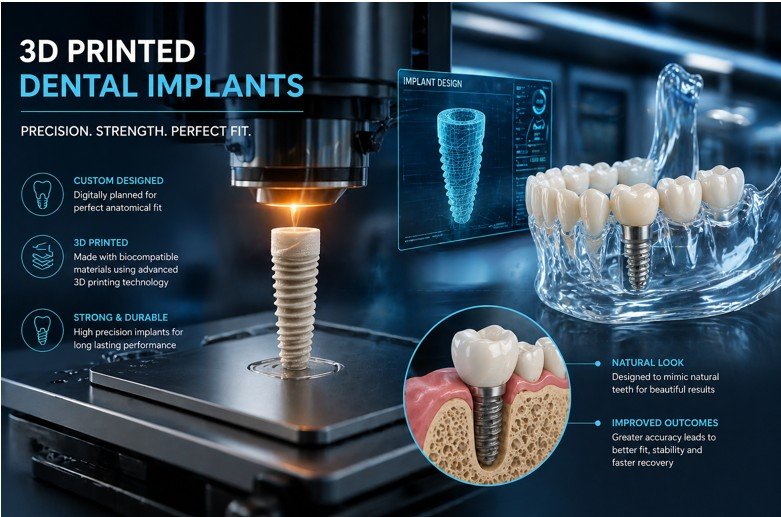
3D printed dental implants are an innovative advancement in modern dentistry, designed using cutting-edge digital technology and additive manufacturing. Unlike traditional implants, these are customized to match the patient’s exact oral structure, resulting in a more precise fit and improved overall outcomes. By using digital scans and specialized software, dental professionals can create implants that align perfectly with the patient’s jawbone and gum tissue.
How 3D Printing Is Changing Implant Dentistry
The rise of 3D printing in dentistry has transformed how implants are designed and placed. With this technology, dentists can plan procedures with greater accuracy and efficiency. While traditional implants still play a major role, innovations like short dental implants are now being enhanced through 3D printing to better suit patients with limited bone volume.
This combination of advanced design and shorter implant length allows more patients to qualify for implant procedures without undergoing invasive bone grafting. As a result, treatment becomes faster, more comfortable, and often more cost-effective. The integration of 3D printing with implant dentistry represents a major step forward in delivering personalized care.
Benefits of 3D Printed Dental Implants
Customized Fit and Precision
One of the most significant advantages of 3D printed dental implants is their ability to be fully customized. Each implant is designed based on detailed digital impressions, ensuring a precise fit that improves stability and comfort. This level of customization reduces the risk of complications and enhances long-term success.
Faster Treatment Process
3D printing streamlines the entire implant process. From planning to placement, everything becomes more efficient. Patients often experience shorter waiting times between consultations and procedures, making the journey to a restored smile much quicker compared to traditional methods.
Improved Outcomes for Complex Cases
For patients with unique dental conditions or limited bone structure, 3D printed implants provide new possibilities. When combined with short dental implants, this technology can address cases that were once considered too challenging. Dentists can design implants that maximize available bone, improving both function and aesthetics.
The Procedure for 3D Printed Dental Implants
Digital Planning and Design
The process begins with advanced imaging, such as 3D scans, which capture detailed information about the patient’s oral anatomy. This data is used to design the implant with precision, ensuring it fits perfectly within the available bone structure.
Implant Fabrication and Placement
Once the design is finalized, the implant is created using 3D printing technology. The dentist then places the implant into the jawbone using a carefully planned approach. Because the implant is customized, the placement is often more straightforward and less invasive.
Healing and Restoration
After placement, the implant undergoes osseointegration, where it fuses with the bone. Once healing is complete, a crown or prosthetic tooth is attached, restoring both appearance and function. The precision of 3D printing often leads to better integration and long-lasting results.
Are 3D Printed Implants Right for You?
3D printed dental implants are ideal for patients seeking a modern, personalized approach to tooth replacement. They are especially beneficial for those with complex dental needs or reduced bone density. However, a thorough evaluation by a dental professional is essential to determine if this option is suitable.
Factors such as overall oral health, bone quality, and treatment goals will influence the decision. In many cases, combining 3D printing technology with short dental implants provides an effective solution that minimizes surgical intervention while maximizing results.
Final Thoughts
The evolution of dental technology continues to improve patient care, and 3D printed dental implants are at the forefront of this transformation. By offering customized solutions, faster treatment times, and enhanced precision, they are redefining what is possible in implant dentistry. For patients looking to restore their smile with advanced techniques, this innovative approach offers a promising and effective option.