
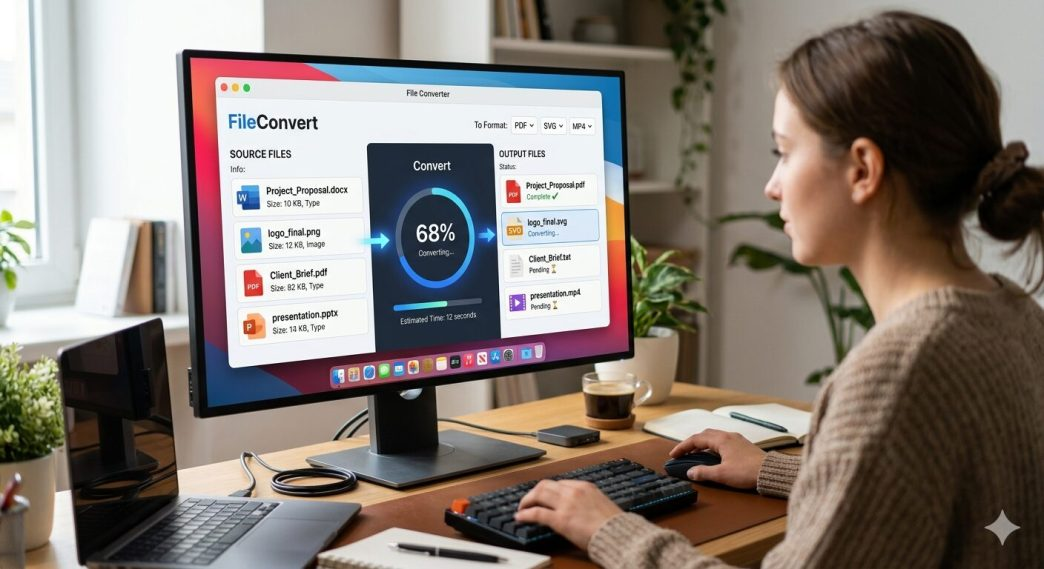
Online file converters make it easy to change documents, images, audio files, and videos into different formats. However, many free conversion websites impose upload limits, restrict the number of daily conversions, or require users to create an account before processing larger files. These restrictions can become frustrating when you need to convert a large PDF, a high-resolution image, or a lengthy video quickly.
Fortunately, several alternatives to online file converters with upload limits can help you complete these tasks more efficiently. Depending on your needs, you can use desktop software, browser-based tools, built-in operating system features, or specialized applications that process files locally. Choosing the right solution can save time, improve privacy, and reduce interruptions during your workflow.
If you regularly work with digital documents and technology, exploring useful resources such as ScoopByte can also help you discover practical approaches to everyday file management. The key is to select a conversion method that matches your file size, preferred format, technical skills, and privacy requirements.
Why Look for Alternatives to Online File Converters?
Online converters are convenient because they usually work directly in a browser. You upload a file, choose an output format, and download the converted version. Nevertheless, their limitations can make them unsuitable for frequent or demanding tasks.
File Size Restrictions
Some websites restrict uploads to a specific number of megabytes. A small document may convert without problems, while a large presentation, video, or scanned PDF might exceed the permitted limit.
Daily Conversion Limits
Free plans sometimes allow only a limited number of conversions per day. This becomes inconvenient for students, freelancers, office employees, and content creators who regularly process multiple files.
Privacy and Security Concerns
Uploading documents to an unfamiliar website means transferring those files to a third-party service. Sensitive contracts, financial records, business documents, and personal photographs deserve additional care.
Internet Dependency
Most online conversion services require a stable internet connection. Slow connections can make uploading and downloading large files time-consuming, particularly when working with videos or high-resolution images.
1. Desktop File Conversion Software
Desktop software is one of the most practical alternatives to online converters with upload limits. Instead of uploading files to a website, you install an application on your computer and process compatible files locally.
Many desktop applications can handle large files without the upload restrictions associated with web-based services. However, performance depends on your computer’s available memory, storage, processor, and the software’s own limitations.
Best Uses for Desktop Converters
Desktop conversion tools are particularly useful for:
- Converting large documents and presentations.
- Processing multiple files in a single session.
- Working without a continuous internet connection.
- Managing business documents locally.
- Converting files repeatedly as part of a regular workflow.
Before installing software, check whether it supports your required input and output formats. Also review its system requirements, licensing terms, and update history.
2. LibreOffice for Document Conversion
LibreOffice is a free, open-source office productivity suite that can open and save many common document formats. It is especially useful for people who frequently convert word-processing documents, spreadsheets, and presentations.
For example, you can open a compatible document and export it as a PDF without uploading it to an online conversion website. You can also work with supported Microsoft Office formats, although complex layouts and advanced formatting may not always transfer perfectly.
When Should You Use LibreOffice?
Consider this option if you need to:
- Convert editable documents into PDF files.
- Open and save supported office document formats.
- Process documents containing text, tables, and images.
- Work with office files without depending on a web converter.
LibreOffice is available for major desktop operating systems. You can learn about its features and supported applications through the official LibreOffice website.
One important consideration is compatibility. If a document contains specialized fonts, complex charts, macros, or advanced formatting, inspect the converted version before sharing it.
3. Built-In Operating System Features
You may not need to install any additional software to convert certain file types. Windows and macOS include features that can help with common document and image tasks.
Save Documents as PDF
Many applications provide a print function that lets you save a document as a PDF instead of sending it to a physical printer. This method works well for reports, receipts, articles, and other documents that need to retain a consistent page layout.
Use Preview on macOS
The Preview application can export supported images and PDFs into selected formats. It is useful for basic conversions, although the available options depend on the original file type.
Check Windows Applications
Windows applications may provide built-in options for saving or exporting files in alternative formats. The available features depend on the application rather than Windows alone.
Built-in tools are particularly helpful when you need occasional conversions and prefer not to install another program.
4. Command-Line Conversion Tools
Command-line applications are useful for users who need greater control over file conversion. They can also help automate repetitive tasks involving large numbers of files.
Tools such as FFmpeg support many audio and video processing operations, while ImageMagick handles numerous image conversion and editing tasks.
Why Command-Line Tools Are Useful
Depending on the application, you can use commands to:
- Convert supported files into different formats.
- Resize images or adjust video settings.
- Process multiple files through scripts.
- Automate recurring conversion tasks.
- Integrate conversion into a larger workflow.
For example, a content creator who regularly converts video files may use FFmpeg to standardize formats or adjust video encoding settings. Someone managing large image collections may use ImageMagick to resize and convert batches of images.
These tools require some technical knowledge. You should also download them from trusted sources, understand the commands before running them, and keep backups of important files.
5. Browser-Based Converters That Process Files Locally
Not every browser-based tool works in the same way. Some applications can process certain files directly in your browser rather than uploading them to a remote server.
This approach can be convenient when you want to avoid installing desktop software but still need an alternative to traditional online converters.
What to Check Before Using One
Look for clear information about how the conversion works. A tool may use local browser processing for some formats but rely on a server for others.
Consider these questions:
- Does the website explain whether files leave your device?
- Is there a documented maximum file size?
- Does the tool support your required formats?
- Can it handle multiple files?
- Does it work in your current browser?
Local browser processing can reduce the need to upload files, but it does not automatically guarantee complete security. Browser extensions, scripts, permissions, and the site’s implementation still matter.
6. Specialized PDF and Image Applications
If you mostly convert one type of file, a specialized application may offer more useful features than a general-purpose converter.
PDF Applications
PDF software can help with tasks such as exporting documents, extracting pages, combining files, or converting PDFs into editable formats. Some features may require a paid license, so check the available functions before choosing an application.
Image Conversion Applications
Image tools can convert formats such as JPEG, PNG, TIFF, and WebP when supported. Some also provide batch processing, resizing, compression, and transparency controls.
Audio and Video Applications
Audio and video converters are designed for media-specific requirements, including codecs, bitrates, resolution, and output quality. These settings can make a significant difference when preparing files for websites, presentations, or social media.
Specialized software is worth considering when you need advanced controls rather than a simple change of file extension.
7. Cloud Storage and Office Applications
Cloud storage platforms and online office applications can provide another route for converting compatible documents. For example, an office application may let you open a supported document and export or download it in another format.
This can be convenient when you already use cloud-based productivity software and do not want to install a separate converter.
However, cloud applications are not always a complete solution for upload limits. They may have their own file-size restrictions, storage quotas, supported-format limitations, and account requirements.
Review the service’s policies before uploading large or sensitive documents. For confidential information, check your organization’s rules and the provider’s privacy and security practices.
How to Choose the Right Alternative
The best alternative depends on the type of file you want to convert and how frequently you perform the task.
Consider File Size
If you regularly work with large files, choose a desktop or local-processing tool that supports your file size and available system resources. Do not assume that every installed application can handle unlimited files.
Check Format Compatibility
Make sure the tool supports both your original format and your desired output format. Some conversions are straightforward, while others can affect formatting, quality, metadata, or interactive features.
Evaluate Privacy
For sensitive files, prefer trusted software that processes documents locally when possible. Review permissions, software sources, and privacy documentation before using an unfamiliar service.
Compare Cost and Ease of Use
A free tool may be sufficient for occasional tasks, while a paid application could offer batch processing or specialized features. Consider the total cost, learning curve, and frequency of use.
Test the Output
Always open the converted file before deleting the original. Check text, images, page layouts, audio quality, video playback, and any other important elements.
Common Mistakes to Avoid
Choosing an alternative converter solves only part of the problem. You should also avoid several common mistakes.
Changing a file extension without converting the file: Renaming a file from one extension to another does not necessarily change its internal format.
Ignoring quality settings: Image compression and video encoding can reduce quality if the settings are unsuitable.
Installing unknown software: Unverified downloads may expose your device to unwanted programs or security risks.
Overlooking formatting problems: Documents can lose fonts, tables, spacing, or other elements during conversion.
Deleting original files too soon: Keep the source file until you confirm that the converted version works correctly.
Following these precautions helps prevent data loss and makes the conversion process more reliable.
Conclusion
The best alternatives to online file converters with upload limits include desktop conversion software, LibreOffice, built-in operating system features, command-line tools, browser-based local converters, specialized applications, and compatible cloud office services.
For everyday document conversion, built-in export features or LibreOffice may be enough. For large media files and repetitive tasks, dedicated desktop or command-line applications can offer greater control. Browser-based local processing may suit users who prefer working without installing additional software.
Before selecting a tool, compare its supported formats, file-size restrictions, privacy practices, and ease of use. Most importantly, keep your original files and verify every converted result. With the right approach, you can convert files efficiently without depending entirely on online services that impose restrictive upload limits.