
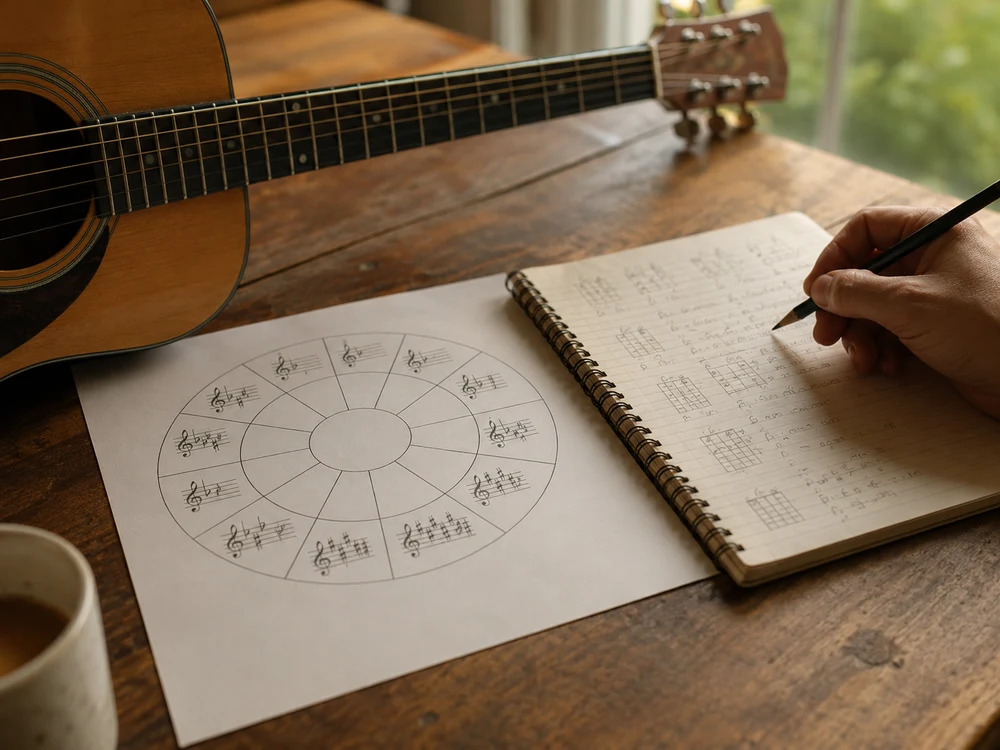
Knowing the musical key of a song can make playing, singing, remixing, and producing music much easier. The key tells you which notes and chords are most closely related to the song and helps musicians understand how the different parts of a track work together. Whether you are a beginner learning music theory or a producer trying to analyze a new track, learning how to identify a song’s key is a useful skill.
One convenient way to begin analyzing a song is to use a music-focused resource such as TuneBat, which can provide useful information about songs and help you explore musical characteristics before examining the track more closely yourself. However, learning to identify a key by ear and through basic music theory gives you a deeper understanding of what you are hearing.
What Does the Key of a Song Mean?
The key of a song is essentially its musical home base. It identifies the main tonal center around which the melody, chords, and harmony are organized.
For example, if a song is in C major, C generally feels like the point where the music wants to settle. The song may use several other notes and chords, but they have relationships to C and the C major scale.
Songs can be written in major or minor keys. Major keys often have a brighter or more stable character, while minor keys are commonly associated with darker or more emotional qualities. These descriptions are general rather than strict rules, since arrangement, melody, tempo, instrumentation, and production can dramatically affect how music feels.
Start by Listening for the Home Note
The easiest way to begin finding a song’s key is to listen for the note that sounds like “home.”
Play the song and pay attention to moments where a musical phrase seems finished. The final note or chord can provide a strong clue because many songs resolve to their tonic, which is the main note of the key.
Try humming along with the song and then pause it at a natural ending. Ask yourself which note feels most comfortable as a place to stop. If that note appears to be G, for example, G could potentially be the tonic.
This method is not always enough on its own, especially with songs that use unusual chord progressions or do not clearly resolve at the end. However, it gives you a useful starting point.
Identify the Main Chords
If you can identify some of the song’s chords, determining the key becomes easier.
Listen for the chords that appear repeatedly throughout the track. Write them down if possible. You might discover a progression such as:
- C major
- G major
- A minor
- F major
These chords all belong naturally to the C major scale, making C major a strong candidate for the song’s key.
You do not necessarily need to identify every chord. A few important chords can be enough to reveal the tonal center. Pay particular attention to chords that occur at the end of musical phrases because they can provide clues about where the progression wants to resolve.
Look for the Tonic Chord
The tonic chord is built on the first note of the key and usually provides a strong feeling of stability.
In C major, the tonic chord is C major. In A minor, it is A minor.
Try playing or singing the suspected tonic while the song is playing. If the note seems to blend naturally and creates a feeling of resolution, you may have found the key’s tonal center.
Music theory resources often describe the tonic as the point of rest in a tonal system. Berklee’s music theory materials also emphasize listening for the tonic and using the opening and ending notes or chords as clues when identifying a key.
Check Whether the Song Is Major or Minor
After finding a possible root note, determine whether the song is major or minor.
Suppose you believe the song is centered around A. It could be A major or A minor. Listen to the overall chord progression and melody to determine which one fits.
One useful approach is to compare the notes used in the song with the notes of the major and minor scales. If the song consistently uses notes associated with A minor and the A minor chord feels like the point of resolution, A minor becomes a strong possibility.
Keep in mind that songs can borrow chords and notes from outside their main key. Finding one unexpected note does not automatically mean that the key is wrong.
Use the Melody as a Clue
The melody can sometimes reveal the key more clearly than the chords.
Listen carefully to the vocal line or lead instrument. Which notes appear frequently? Which note seems to provide a sense of rest when a phrase ends?
You can try singing the melody and stopping on different notes. Eventually, one note may feel significantly more stable than the others. That note is often the tonic.
This technique becomes easier with practice. Musicians develop what is commonly called relative pitch, allowing them to recognize relationships between notes rather than depending entirely on absolute pitch.
Compare the Notes With a Scale
Once you have a suspected tonic, write down the notes that appear in the song and compare them with possible scales.
For example, the C major scale contains:
C, D, E, F, G, A, B
If most of the song’s melody and chords can be explained using these notes, C major may be the correct key.
You can perform the same process with other possible keys. The goal is not simply to find a scale containing a few notes from the song. Instead, look for the scale that best explains the melody, chords, and feeling of resolution.
Use the Circle of Fifths
The circle of fifths is another helpful tool for understanding relationships between musical keys.
It organizes keys according to their relationships and shows how major and minor keys are connected. It can also help you understand key signatures and the number of sharps or flats associated with different keys.
If you already know some of the chords in a song, the circle of fifths can help narrow down possible keys. It is especially useful when working with traditional harmony and common chord progressions.
Beginners do not need to memorize the entire circle immediately. Start by learning a few common key relationships and gradually expand your knowledge.
Check the Bass Line
The bass can provide another important clue.
Bass players frequently emphasize the roots of chords, making the underlying harmony easier to hear. Listen to the lowest notes in the recording and identify notes that appear repeatedly.
If the bass repeatedly returns to one particular note during important points in the progression, that note could be the tonic or another important scale degree.
Be careful, though. The lowest note is not always the key. A bass line can use passing tones, inversions, and notes outside the main key, so it should be considered alongside the melody and chord progression.
Use Software and Online Tools as a Second Opinion
Technology can make key detection much faster. Many music-analysis tools can estimate a track’s key automatically, which is useful when working with unfamiliar recordings.
However, automatic detection should not always be treated as absolute. Complex arrangements, modulations, modal music, unusual tuning, and ambiguous harmony can confuse automated systems.
A good workflow is to use a tool to generate a starting point and then verify the result with your ears. Play the suggested tonic against the song and listen for whether it actually feels like the musical home.
What If a Song Changes Key?
Some songs do not stay in one key from beginning to end.
A track may begin in one key and later modulate to another. This is common in some pop, classical, jazz, musical theatre, and other styles.
If the beginning and ending of a song seem to have different tonal centers, do not automatically assume that you identified the first key incorrectly. The song may genuinely contain a key change.
Analyze each section separately. Identify the tonal center of the verse, chorus, bridge, or other major sections and then determine how those sections relate to each other.
Practice With Familiar Songs
The best way to improve is through repeated practice.
Choose songs that you already know well and try to identify their keys before checking an external source. Start with simple songs that use straightforward chord progressions. Once you become comfortable, move on to tracks with more complicated harmony.
A useful practice routine is:
- Listen to the song several times.
- Find the note that feels like home.
- Identify a few important chords.
- Decide whether the song sounds major or minor.
- Compare the notes with possible scales.
- Check your answer using a reliable music-analysis resource.
- Repeat the process with another song.
Over time, your ears will become better at recognizing tonal centers without needing an instrument or software.
Final Thoughts
Learning how to find the musical key of a song combines listening skills with basic music theory. Start by identifying the note that feels like home, then examine the song’s chords, melody, bass line, and scale. Tools can help confirm your answer, but developing your ear is what ultimately makes the process faster and more reliable.
You do not need advanced music theory to get started. With regular practice, you can learn to recognize major and minor keys, understand common chord relationships, and analyze songs more confidently. Whether you are a singer, guitarist, producer, DJ, songwriter, or simply a music fan, knowing how to identify a song’s key is a practical skill worth developing.