
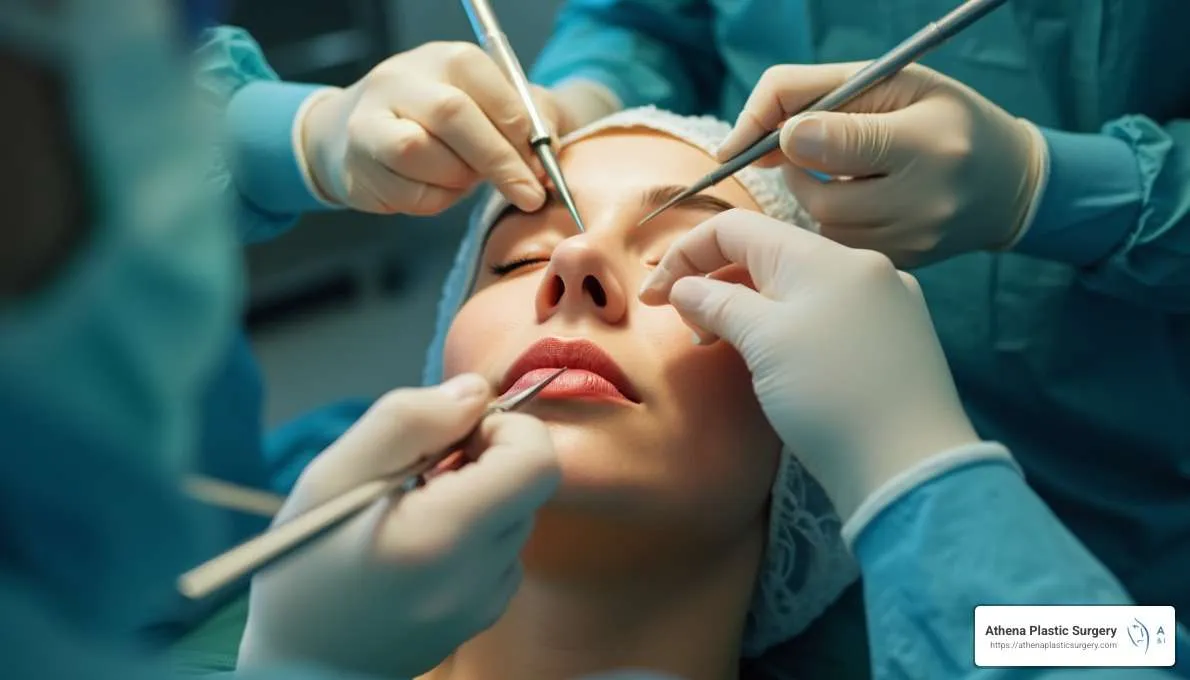
Plastic surgery is a medical specialty originally created to reconstruct facial and body defects due to birth disorders, trauma, burns, and disease. It is now commonly used to alter a person’s aesthetic appearance. Here’s more information on modern plastic surgery options and their benefits:
Nonsurgical Options
Cosmetic dermatology and plastic surgery share the common goal of enhancing a person’s appearance, but they differ in their approaches. Cosmetic dermatology primarily focuses on utilizing minimally invasive procedures to improve the skin’s texture, tone, and general appearance. These cosmetic treatments, including Botox, dermal fillers, and chemical peels, are typically nonsurgical and require little to no recovery time.
While cosmetic dermatology often addresses surface-level concerns, plastic surgery is utilized for reconstructive and cosmetic purposes. Plastic surgery involves more invasive techniques and aims to reshape or reconstruct physical features through surgical procedures. Some well-known surgical procedures include:
- Rhinoplasty
- Facelift
- Breast Augmentation
Many individuals seek aesthetic improvements without undergoing surgery, and several nonsurgical treatments are available to address various concerns. These options often involve minimal recovery time while providing noticeable results.
Chemical Peels
A chemical peel is a technique that improves the appearance of the skin on the face, neck, or hands. A chemical solution is applied to the skin’s surface, causing it to exfoliate and eventually peel off. The new, underlying skin is usually smoother and less wrinkled than the old skin.
Chemical peels offer a wide range of benefits for individuals seeking to rejuvenate their skin and address specific concerns. By promoting the removal of dead skin cells, chemical peels can help to improve skin texture and tone. They are effective at reducing the appearance of fine lines and wrinkles and minimizing discoloration caused by sun damage, age spots, or acne scars.
HydraFacials
A HydraFacial is a multi-step facial treatment that uses patented hydradermabrasion technology to cleanse, exfoliate, extract, and hydrate the skin. This procedure can help address a variety of skin concerns in a single treatment session. Hydradermabrasion is a non-invasive technique that combines gentle exfoliation with deep hydration, utilizing water and nourishing serums to effectively remove dead skin cells while simultaneously infusing the skin with nutrients. Unlike traditional microdermabrasion, which often relies on abrasive materials, hydradermabrasion is suitable for most skin types.
Laser Hair Removal
Laser hair removal is a medical procedure that uses a concentrated beam of light to remove unwanted facial and body hair. During the process, a laser emits a light that is absorbed by the pigment in the hair, and the light energy is converted to heat. This heat damages the hair follicles to inhibit future hair growth.
Facial Surgery Options
Facial surgery is performed to enhance the harmony and balance of facial features, and surgery may involve a combination of techniques. A consultation with a plastic surgeon is required for a personal evaluation, where they explain treatments and offer cosmetic recommendations. One commonly performed facial surgery is a facelift, or rhytidectomy.
Facelifts are procedures that address visible signs of aging in the face and neck, by a surgeon tightening underlying muscles and repositioning the skin. This is done to reduce facial sagging and smooth deep skin creases. Another surgical facial option involves custom facial implants to augment facial structure. These implants are crafted to fit an individual’s specific anatomy, providing volume and shape to areas like the cheeks, chin, or jaw.
Body Surgery Options
Body plastic surgery procedures aim to reshape specific areas to address changes that occur after weight fluctuations, pregnancy, or due to aging. Body contouring procedures, like an abdominoplasty (tummy tuck) and liposuction, remove excess skin and fat to create a more toned and defined physique. Breast augmentations are performed to increase breast size or restore breast volume. This is achieved using saline or silicone implants, or in some cases, through fat transfer from another part of the body.
Learn More About Plastic Surgery
Plastic surgery offers a diverse array of procedures to help individuals address their specific functional and aesthetic goals. From minor, nonsurgical enhancements to more extensive surgical interventions, options exist for nearly every area of the face and body. To learn about your options, contact a board-certified plastic surgeon for a consultation today.