
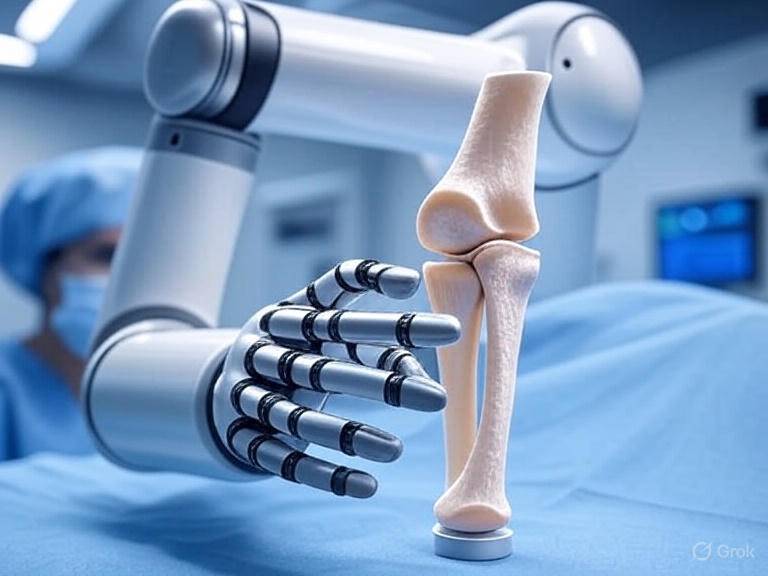
Robotic joint replacement utilizes advanced technology to enhance the precision and success of surgeries. Doctors combine robotics with data-driven methods to achieve highly accurate results that are personalized for each patient’s unique anatomy. This process involves imaging, feedback systems, and specialized tools to replace damaged joints with artificial ones. Here’s how data helps improve this process and increase success rates:
3D Computed Tomography Plan
The foundation of robotic joint replacement is a personalized surgical plan created using 3D computed tomography (CT) imaging. Surgeons rely on detailed scans to precisely measure the joint and surrounding anatomy. These images generate a digital model that enables a thorough examination of the joint’s structure before surgery.
This 3D model offers a clear view of where the replacement parts should be placed, helping to reduce errors during the procedure. It also pre-determines every angle and contour that needs attention. Using this virtual map, surgeons can achieve precise alignment, which minimizes unnecessary damage to bone and tissue. Overall, this step highlights the need for pre-surgery planning based on customized data.
Haptic Feedback Technology
Robotic joint replacement relies heavily on haptic feedback technology for accuracy. This system interprets the movements of the robotic arm in real time, offering resistance or alerts if deviations occur. Robotic systems with haptic feedback also help surgeons maintain precision in challenging situations, such as limited visibility or complex joint structures. By continuously providing real-time data, these systems enable surgeons to work more effectively within predefined limits.
Damaged Joint Removal
Effective removal of damaged joint surfaces is another critical step where data plays a pivotal role. During this stage, surgeons use the guidance provided by the robotic system to accurately shape the bone, preparing it for the placement of replacement components. The goal is to remove only the affected parts while preserving as much healthy bone as possible. The robotic system’s reliance on data-driven analytics minimizes issues. Tools assess the hardness of bone in real-time. This precision avoids excess removal of bone tissue, which can otherwise lead to complications or mismatched implant placements.
Metal or Ceramic Replacement
Once the joint has been prepared, the robotic system assists with the placement of metal or ceramic components. Robotic accuracy during this phase depends on the reference data collected during the planning and scanning stages. The system ensures that the replacement parts align perfectly with the surrounding anatomy.
Both material types, metal and ceramic, offer unique benefits, and their selection depends on the patient’s specific condition. Robotic guidance helps fit these components tightly into the prepared spaces. Every angle, depth, and alignment factor is looked at to match the specifications pre-determined by imaging and planning. Surgeons use the robotic system to finalize positioning and confirm that the components are securely in place. The joint’s natural range of motion is then tested within these parameters, reflecting the balance between technology and human skill during this part of the surgery.
Get Robotic Joint Replacement
Robotic joint replacement utilizes advanced imaging, precise tools, and data-guided systems to simplify a complex procedure. Every step relies on detailed data and robotic technology. This combination helps surgeons customize the surgery to fit each patient’s anatomy with high accuracy. If you’re looking at joint replacement surgery, robotic technology offers a data-driven way to meet surgical goals. Consult a medical professional to determine if this method is suitable for you.