
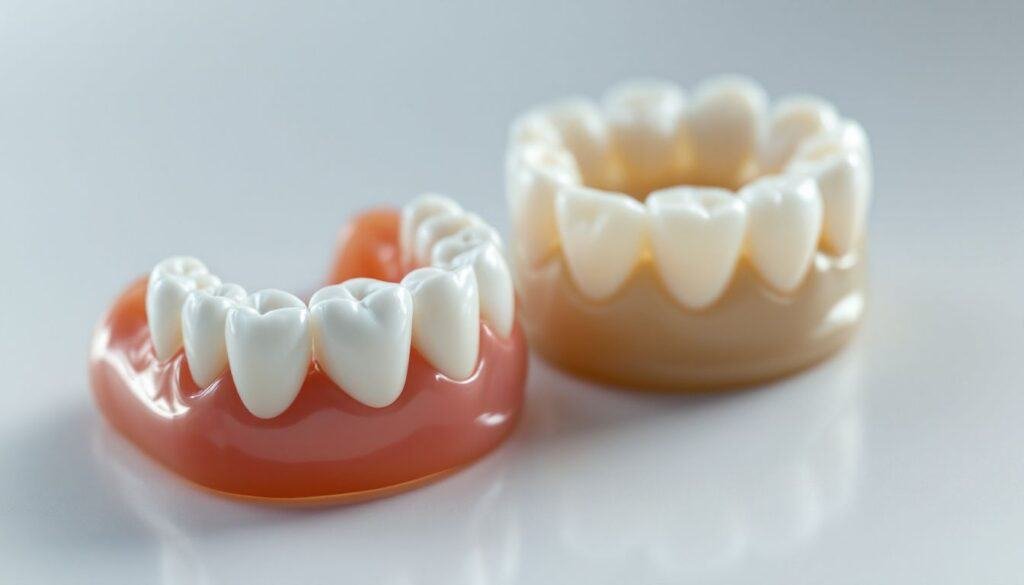
Dental crowns are strong covers fitted over a broken tooth to stop it from further damage and restore its function to that of a new one. Have you got a broken tooth, a large filling, and perhaps just finished a root canal? If so, dental crowns are what your teeth need the most. We shall break down all that is required to explain what dental crowns are, their kinds, how they are created, and just why patients adore them.
What Are Dental Crowns?
A dental crown is placed on top of your tooth, restore the shape, strength, and function after the tooth has undergone decay, injury, or wear. These crowns may last 10-15 years with maintenance. They give your teeth shape, strength, and beauty after an injury from decay, injury, or wear. They can be placed on the front and back teeth to repair smiles and chewing problems. They can last for about 10 to 15 years with visits. Patients often ask: ‘Do dental crowns hurt?’ Not really, because numbing will help.
When You Need a Crown
Crown are needed in case of fractured teeth or cusps, large cavities over 50% dentin, or after root canal treatment. In case of cracked teeth, a temporary crown is placed to test it. Kids’ baby teeth require the use of the metal crown. Avoid if there’s decay or serious gum problems. Delicate shields for slight wear. If you are getting pain while eating and have visible cracks, you might need one.
Types of Dental Crowns
The crowns may be used by a dentist according to their strength, aesthetic, and fitting abilities. The following is a brief overview of the crowns.
1. Full Metal Crowns
These solid metal crowns from high-noble alloys or base metals like chrome-cobalt are best for back teeth with minimal tooth reduction.
Why prefer: Unbeatable longevity (20+ years) for back teeth grinders.
Problems: First of all, they are not aesthetic and may not be advisable in the front teeth. Metal color shows with gum recession and metal allergies might happen.
2. Metal Ceramic Crowns
Includes Porcelain-Fused-to-Metal (PFM), Direct Metal Laser Sintering (DMLS) for accurate metal bases, and Porcelain-Fused-to-Titanium (PFT).
Why prefer: It provides both strength and esthetics.
Problems: Porcelain chipping and metal might be visible at margins.
3. Ceramic Crowns
Made up of lithium disilicate or leucite reinforced glass, and full porcelain without metal.
Why prefer: Best translucency comparable to enamel for front teeth aesthetics.
Problems: Lower strength risks fracture in back teeth.
4. Zirconia Crowns
Made by cutting High-strength zirconia blocks of solid or layered shape.
Why prefer: No chipping, ideal for those who grind there teeth.
Problems: Opaque appearance needs layering for front teeth.
5. Composite Crowns
Made of resin material, like inlays, replace the area inside cusps, onlays replace the area outside cusps, or full overlays.
Why prefer: Single-visit treatment and, needs less tooth trimming.
Problems: It will wear down much faster, and stains easily from coffee or tea.
6. Gold Crowns
High-gold alloys have the lowest failure rates over 20-30 years.
Why prefer: Maximal durability, and minimal trimming needed for back teeth.
Problems: Yellow metal appearance is not aesthetic for visible teeth.
7. Hybrid Crowns
The example of hybrid crowns are zirconia-reinforced lithium disilicate.
Why prefer: They are made by CAD/CAM to have both toughness and translucency.
Problems: Limited long-term data and higher cost.
Choose the right type of dental crown with your dentist as per your needs.
Placing Your Dental Crown
First, the dentist will trim or prepare your teeth at a specific angle and proportions to make sure the crown can be fixed and locked in the ideal position well, then the crown is cemented on the respective tooth. Afterwards, the dentist will check your bite, so teeth will meet right. Clean extras to keep gums happy and for aesthetic purposes. Crown cementation is quick and painless.
In summary, dental crowns restore your smile, strength, and confidence. Pick the perfect type with your dentist for years of worry-free chewing.
FAQs
1. Can I eat normally after getting a crown?
A. Yes, your dentist just suggests avoiding eating very hard food on the same day, so you can start with soft foods on the first day, then gradually start with hard foods. Avoid food that is sticky or hard, such as caramel or ice.
.
2. How do I take care of my dental crown?
A. Brush your teeth twice a day, floss around it, and visit the dentist every six months. Use night guards if you grind your teeth.
3. How long does the dental crown procedure take?
A. Two visits usually: first visit to shape the tooth and then they take an impression of your mouth, which takes about 1-2 hours, and in the second visit to place the crown and which takes less than an hour. A temporary crown helps you chew food in the meantime.
4. Do dental crowns cause metal allergies? A. All-ceramic and zirconia don’t cause allergies, while metal and PFM crowns can cause allergies for some people if they have related medical histories.


Leave a Reply