
Accurate diagnostics shape long-term health outcomes. In dentistry, that process begins with how clinicians capture intra-oral data. Errors at this stage affect fit, comfort, and follow-up care.
As digital tools replace physical impressions, precision matters more than speed alone.
Digital scanning already shows measurable gains. A systematic review indexed by the National Institutes of Health found that digital dental impressions captured through intra-oral scanning match or exceed the accuracy of conventional impression techniques.
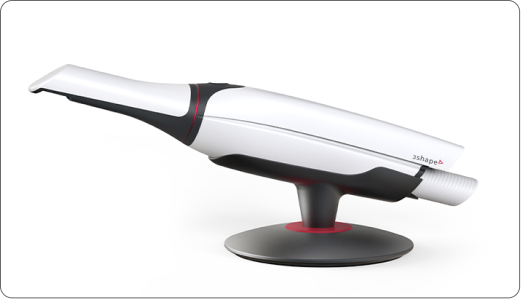
The TRIOS 6 Wireless Intra-Oral Scanner highlights how modern systems support this shift. Wireless capture improves chairside movement and positioning during scanning. Scan data then moves into design and fabrication environments built around CAD/CAM dental software, where early accuracy shapes every downstream step.
This article explores:
- How Digital Intra-oral Scanning Changed Clinical Accuracy
- Where wireless capture improves patient experience
- Why data quality matters across CAD/CAM workflows
The Shift Toward Digital Intra-Oral Scanning
Physical impressions introduce variability at the earliest stage of care. Impression materials distort under pressure, and setting time affects results. Small handling differences can affect accuracy before the process even reaches the design or fabrication stage.
Those limitations affect more than workflow efficiency. Distorted impressions increase the likelihood of retakes, extend appointment time, and add friction for both patients and clinicians. Errors introduced early tend to persist, necessitating correction later when options are more limited.
Digital intra-oral scanning changed that dynamic. Scan data captures anatomy directly without impression materials or manual transfers. Clinicians receive immediate visual feedback during capture, allowing errors to be corrected before they move downstream.
That repeatable accuracy explains why digital workflows replaced physical impressions as precision expectations increased.
What the TRIOS 6 Wireless Intra-Oral Scanner Represents
Wireless intra-oral scanning reflects a broader shift in clinical expectations. Accuracy remains essential, but reliability under real chairside conditions now carries equal weight. TRIOS 6 exemplifies this evolution, demonstrating how scanning technology adapted to everyday clinical demands.
Design decisions around mobility influence how consistently clinicians capture data. Patient movement, repositioning, and access challenges are part of routine care. Tools that accommodate those realities reduce interruptions and help maintain stable scan paths throughout the procedure.
Wireless Design and Clinical Flow
Wireless scanning removes physical constraints during appointments. Without cords or fixed stations, clinicians adjust position more easily while maintaining consistent capture. That flexibility matters during complex cases where movement is unavoidable.
Clinical workflow improves when scanning adapts to the procedure rather than interrupting it. Fewer pauses reduce partial scans and rescans, which helps preserve data quality before it enters the digital workflow.
Scan Accuracy and Data Capture
Modern intra-oral scanners prioritize dense, continuous data capture. TRIOS 6 reflects this emphasis through stable sensor performance and consistent processing. Smooth scan paths reduce stitching errors that complicate digital design.
Accurate capture at this stage protects all subsequent steps. When scan data accurately reflect anatomy, design decisions remain tighter, and fabrication requires fewer corrections. That stability improves predictability across cases.
How Digital Scanning Connects to CAD/CAM Workflows
Digital scanning marks the starting point of a longer process. What happens after capture determines whether accuracy holds or degrades. Clean data moves forward efficiently, while weak data introduces friction that compounds with each step.
That handoff follows a clear path:
- scan data entering digital design environments
- design data guiding fabrication output
When scan data remains accurate, design adjustments stay limited, and fabrication runs predictably. When early capture falls short, corrections accumulate later. Those corrections increase remakes, extend chair time, and reduce consistency across outcomes.
Accuracy, Predictability, and Long-Term Outcomes
Predictability defines quality in restorative care. When input data remains consistent, outcomes stay within a narrower range. That stability reduces downstream correction and supports longer-lasting results.
| Aspect | Digital Intra-Oral Scanning | Conventional Impressions |
| Dimensional accuracy | More consistent across cases | Greater variability from materials |
| Adjustment rates | Fewer chairside corrections | Higher likelihood of remakes |
| Data transfer | Direct digital workflow | Manual conversion steps |
Clinical data support that contrast. A randomized clinical trial indexed by The National Library of Medicine examined chairside adjustment time for implant-supported crowns and reported lower occlusal adjustment time in cast-free digital workflows compared to conventional impression methods.
Predictability still matters even when time differences appear modest. Fewer corrections protect fit, reduce follow-up friction, and support more consistent outcomes across repeated cases.
Where Digital Scanning Still Falls Short
Digital scanning improves accuracy, but it does not remove variability entirely. Outcomes still depend on how data is captured and the conditions under which scanning occurs. Understanding those limits matters when evaluating results.
This section looks at:
- how operator technique influences scan reliability
- where real-world conditions affect data quality
Operator Technique and Scan Discipline
Intra-oral scanners respond directly to how they are used. Scan path, pacing, and overlap affect how data is stitched together. Inconsistent technique introduces errors even when the hardware performs as intended.
Training and experience reduce those risks, but they do not eliminate them. Poor scanning discipline leads to incomplete datasets that require subsequent correction. The technology captures what it is shown, not what was intended.
Real-World Conditions Inside the Oral Cavity
Clinical environments introduce challenges that software cannot fully correct. Patient movement, moisture, and limited access affect the quality of capture. These factors vary from case to case and influence outcomes in subtle ways.
Complex anatomy increases that sensitivity. Crowding, reflective surfaces, and deep margins test the limits of digital capture. In such situations, accuracy depends on both the tool’s capability and the extent to which clinicians adapt their approach.
How Adoption Gaps Affect Real-World Outcomes
Digital tools do not yield uniform results across all practices. Outcomes vary with the degree to which technology is consistently adopted, integrated, and used over time. The same scanner can support strong results in one setting and uneven results in another, even when the underlying hardware is identical.
Those gaps usually emerge during implementation. Training depth, workflow alignment, and day-to-day habits shape how well scan data holds up downstream. When teams treat digital capture as a plug-and-play replacement for impressions, small process issues tend to surface later as design revisions or fabrication adjustments.
Recognizing those differences matters when evaluating results. Technology sets capability, but execution determines reliability. Practices that align tools with training and workflow discipline yield more consistent outcomes, whereas others exhibit variability that reflects process gaps rather than technical limits.
Why Objective Evaluation of Dental Technology Matters
Digital tools continue to evolve quickly, but adoption alone does not guarantee better outcomes. New technology changes workflows, expectations, and clinical habits all at once. Without objective evaluation, it is difficult to distinguish meaningful improvements from marginal gains that appear impressive yet deliver little impact.
The real value of any diagnostic tool shows up over time. Consistent accuracy reduces corrections. Predictable data supports better design decisions. Fewer downstream adjustments protect both clinical efficiency and patient experience. When technology earns trust through repeatable performance, it strengthens care rather than complicating it.
Objective evaluation keeps decision-making grounded. It encourages clinicians to weigh evidence, limitations, and real-world conditions rather than novelty. In a field where early data shapes every step that follows, restraint and judgment matter as much as innovation.

Leave a Reply