
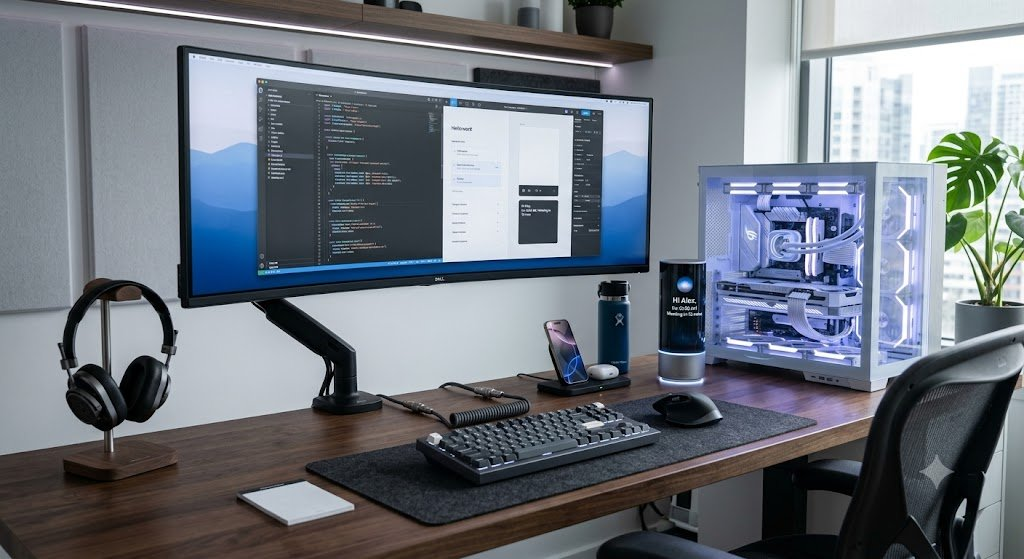
Technology gadgets are becoming increasingly diverse, with smartphones, laptops, tablets, smartwatches, headphones, gaming devices, and smart home products available at a wide range of prices. With so many choices, selecting the right device can quickly become confusing. Two products may look similar while offering significant differences in performance, features, durability, and overall value.
A good comparison should therefore go beyond simply looking at prices or specifications. Resources such as Geekzilla.io can help technology enthusiasts explore gadgets and technology-related information before making an informed purchasing decision.
Start With Your Main Purpose
Before comparing gadgets, determine exactly what you need the device to do. This is one of the most important steps because the “best” gadget depends heavily on the user’s requirements.
For example, someone buying a laptop for basic office work may prioritize battery life, portability, and reliability. A professional video editor may care much more about processor performance, RAM, graphics capabilities, and display quality.
Similarly, someone purchasing wireless headphones for commuting may prioritize noise cancellation and comfort, while a gamer might focus on latency, sound positioning, and microphone quality.
Create a short list of the tasks you expect the gadget to perform. This prevents impressive but unnecessary features from influencing your decision.
Compare the Core Specifications
Specifications provide a useful starting point when comparing technology products. However, it is important to understand what each specification actually means.
Depending on the device, relevant specifications may include:
- Processor or chipset
- RAM
- Internal storage
- Display resolution
- Refresh rate
- Battery capacity
- Camera specifications
- Connectivity options
- Weight and dimensions
- Operating system
- Water or dust resistance
Do not assume that a higher number automatically means a better product. For example, a higher camera megapixel count does not necessarily guarantee better photographs. Similarly, a larger battery does not always mean longer battery life because efficiency, software, and screen characteristics also matter.
Specifications should be considered alongside real-world performance.
Evaluate Performance for Your Workload
Performance is one of the most important factors in a gadget comparison.
For computers and smartphones, consider how quickly the device launches applications, handles multitasking, processes demanding workloads, and maintains performance over time.
A device designed for basic browsing and communication does not necessarily need the most powerful processor available. Spending extra money on high-end hardware may provide little practical benefit if your everyday activities are relatively simple.
On the other hand, demanding users should avoid choosing a device based only on its low price. A cheaper gadget that struggles with your workload may ultimately be more expensive if you need to replace it sooner.
Consider Battery Life
Battery life can have a major impact on everyday convenience, particularly for portable gadgets.
Manufacturers often provide battery estimates, but actual performance can vary depending on brightness, applications, connectivity, processor activity, and usage patterns.
When comparing devices, look for realistic information about how long the product lasts during the activities you actually perform.
For example, battery performance during video playback may differ considerably from battery performance during gaming or intensive productivity tasks.
Also consider charging speed and charging compatibility. A device with slightly shorter battery life may still be more convenient if it supports fast charging.
Compare Display Quality
The display is particularly important for smartphones, laptops, monitors, tablets, and televisions.
Important factors include:
- Screen size
- Resolution
- Brightness
- Refresh rate
- Color accuracy
- Contrast
- Panel technology
- Viewing angles
Higher resolution can provide sharper images, but it may also consume more power. A high refresh rate can make scrolling and supported games feel smoother, but not every user needs an extremely high refresh rate.
Think about where and how you will use the device. Outdoor users may benefit from a brighter screen, while creative professionals may place greater importance on color accuracy.
Examine Build Quality and Design
A gadget can have impressive specifications but still be a poor choice if its physical design does not suit your needs.
Consider the materials used, weight, thickness, button placement, ports, ergonomics, and overall construction.
For portable devices, durability can be especially important because the gadget may be carried frequently and exposed to drops, pressure, or changing environments.
Also consider whether the device is comfortable to hold or use for extended periods. Specifications rarely tell you how pleasant a product is to use every day.
Look at Software and Ecosystem Compatibility
Hardware is only part of the experience. Software can significantly influence how useful a gadget becomes.
Check which operating system the device uses and determine whether your preferred applications are available. Also consider compatibility with other products you already own.
For example, a person heavily invested in a particular smartphone, computer, or smart home ecosystem may benefit from purchasing devices that integrate smoothly with existing products.
Software update policies are another important consideration. A device that receives regular security and feature updates may remain useful for longer than a product with limited software support.
Compare Connectivity Options
Modern gadgets often depend on wireless and wired connections, making connectivity an important comparison point.
Depending on the product, look at available options such as Wi-Fi, Bluetooth, USB, HDMI, NFC, cellular connectivity, or other relevant standards.
Consider what you actually need rather than simply choosing the gadget with the longest list of connectivity features.
For example, a laptop without the ports you regularly use may require adapters, while a wireless accessory with an older connectivity standard may provide a less convenient experience with newer devices.
Research Camera and Audio Features
For smartphones, tablets, webcams, and other multimedia gadgets, camera and audio quality can significantly affect the overall experience.
When comparing cameras, consider more than megapixels. Sensor size, image processing, stabilization, low-light performance, autofocus, and video capabilities can all influence results.
For audio products, look at sound quality, microphone performance, noise cancellation, comfort, codec support, and connection stability.
Real-world reviews and sample tests can often reveal differences that specifications alone cannot communicate.
Compare Prices and Total Cost of Ownership
Price is important, but the initial purchase price should not be the only financial consideration.
Think about the total cost of owning the gadget. This can include accessories, replacement parts, subscriptions, repairs, storage upgrades, cases, chargers, or other necessary purchases.
A cheaper device may become less attractive if it requires expensive accessories or has limited durability. Conversely, a more expensive product may provide better long-term value if it lasts longer and receives software support for an extended period.
The goal is to determine value rather than simply finding the lowest price.
Read Independent Reviews
Independent reviews can help identify strengths and weaknesses that are not obvious from product specifications.
When reading reviews, look for sources that explain how the gadget performed in real-world situations. Pay attention to repeated observations across multiple reviews rather than relying on a single opinion.
It is also useful to distinguish between professional reviews and customer feedback. Professional testing may provide detailed performance information, while customer reviews can reveal long-term usability issues.
For broader consumer technology information and product evaluation guidance, Consumer Reports is a useful independent resource.
Think About Long-Term Value
A gadget should not be evaluated only on how impressive it seems when it is first released.
Consider how well it is likely to meet your needs over the next several years. Check factors such as software support, repairability, battery replacement options, storage capacity, hardware performance, and accessory availability.
Future needs matter too. If your workload is likely to become more demanding, buying a device with slightly stronger capabilities today may prevent an early upgrade.
However, avoid paying significantly more for features you are unlikely to use.
Create a Simple Comparison Table
Once you have narrowed down your options, create a basic comparison table.
You could compare:
| Feature | Gadget A | Gadget B | Gadget C |
|---|---|---|---|
| Price | |||
| Performance | |||
| Battery life | |||
| Display | |||
| Storage | |||
| Build quality | |||
| Software support | |||
| Connectivity | |||
| Warranty |
Assign greater importance to the categories that matter most to you. This makes the final decision more objective and prevents one impressive feature from dominating the entire comparison.
Avoid Common Comparison Mistakes
One common mistake is focusing entirely on specifications. Another is assuming the newest product is automatically the best option.
It is also easy to become influenced by brand reputation, marketing claims, or online popularity. A highly popular product may still be unsuitable for your particular requirements.
Avoid comparing products without considering their intended audiences. A premium gaming laptop and an affordable productivity laptop may both be excellent products, but they are designed for very different users.
The best comparison is therefore not about declaring one gadget universally superior. It is about identifying which product provides the best combination of features, performance, price, and usability for a specific person.
Conclusion
Learning how to compare technology gadgets makes purchasing decisions much easier. Start by identifying your needs, then evaluate specifications, performance, battery life, display quality, design, software compatibility, connectivity, and long-term value.
Price should be considered alongside the total cost of ownership rather than treated as the only deciding factor. Independent reviews and real-world testing can also reveal information that manufacturers’ specifications may not show.
Most importantly, remember that there is no single best gadget for everyone. The right product is the one that matches your workload, preferences, budget, and expected lifespan. A thoughtful comparison can help you spend your money more effectively and choose technology that remains useful long after the initial purchase.