
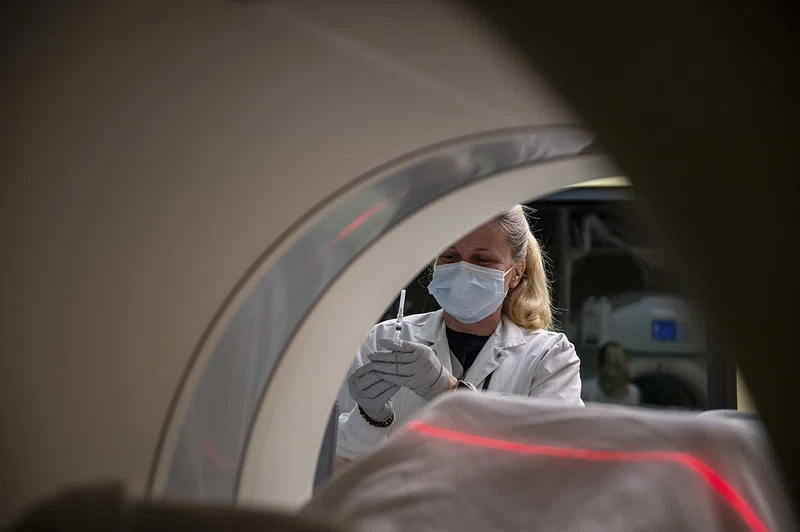
MRI has come a long way since its introduction in the late 20th century, transforming how doctors visualize the body’s internal structures. Today’s magnetic resonance imaging systems deliver faster, clearer, and detailed results, helping physicians diagnose conditions with remarkable precision. From advances in magnetic field strength to the development of functional and 3D imaging, MRI technology continues to push the boundaries of modern medicine. Here’s a look at how MRI has evolved over the years and what these innovations mean for patient care:
Origins of MRI Technology
The principles behind magnetic resonance imaging were developed long before the first human scan. In the 1940s, scientists discovered the phenomenon of nuclear magnetic resonance (NMR), where atomic nuclei absorb and re-emit electromagnetic energy when placed in a magnetic field. This discovery earned a Nobel Prize and laid the groundwork for future applications.
Decades later, in the 1970s, researchers figured out how to use these principles to create images. They developed a method to translate the signals from atomic nuclei into a two-dimensional picture. The first MRI scan of a human body was performed in 1977, a milestone that marked the beginning of a new era in diagnostic imaging. This early technology was slow and produced basic images, but it proved that a non-invasive look inside the body was possible.
Advancements in Imaging Precision
Following its first clinical use, MRI technology advanced rapidly. A key development was the introduction of stronger magnets. Early MRI machines used magnets with lower field strengths, resulting in less detailed images. Today’s systems have much stronger magnetic fields, which produce higher-resolution images and allow for faster scan times. This improvement in imaging quality has been fundamental for detecting smaller abnormalities with greater accuracy. Software and computing power have also played a large role in the evolution of MRI. Advanced algorithms can process raw data from the scanner efficiently, creating clearer and detailed images.
MRI Applications and Patient Experience
Modern MRI technology is designed with the patient experience in mind. Early scanners were narrow and could be uncomfortable, especially for patients with claustrophobia. Newer models offer more space and help reduce anxiety during the procedure. The scanning process has also become faster. While early scans could take hours, many modern MRI screenings can be completed in as little as 20 minutes, depending on the area being examined.
Today, MRI is a versatile diagnostic imaging tool with broad clinical applications. It is regularly used to diagnose a wide array of health problems, including:
- Anomalies of the brain and spinal cord.
- Tumors, cysts, and other masses.
- Injuries to joints, such as the knee and shoulder.
- Certain heart problems and diseases of abdominal organs.
The detailed images provided by MRI are helpful for doctors in making accurate diagnoses and planning effective treatments.
Trends in Diagnostic Imaging
Researchers are currently working on developing even stronger magnets, which could provide images with unprecedented detail. The integration of artificial intelligence (AI) is set to transform the field. AI algorithms may soon be able to analyze MRI images faster and accurately than human radiologists, potentially identifying subtle signs of disease that may otherwise be missed. This could lead to earlier diagnoses and more personalized treatment plans. Another area of innovation is portable MRI technology. Smaller, lower-cost MRI machines could make diagnostic imaging accessible in remote or underserved areas.
Schedule Your MRI Appointment Today
From its scientific origins to its current status as a component of diagnostic imaging, Magnetic resonance imaging technology has undergone a remarkable transformation. Continuous advancements have improved image quality, reduced scan times, and enhanced patient comfort. If you need to schedule an MRI, contact an expert radiologist near you to schedule your appointment today. They can provide more information about the procedure and help you prepare for your appointment.